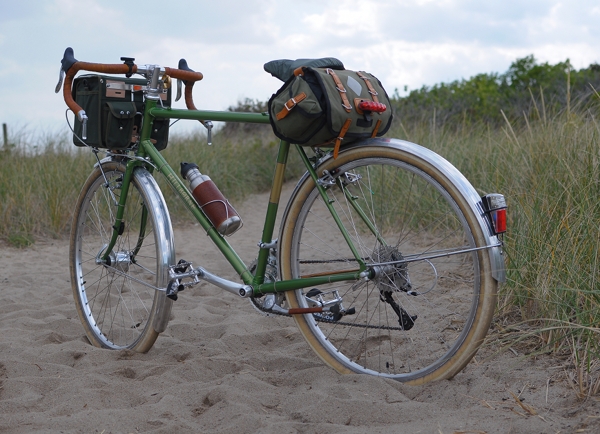
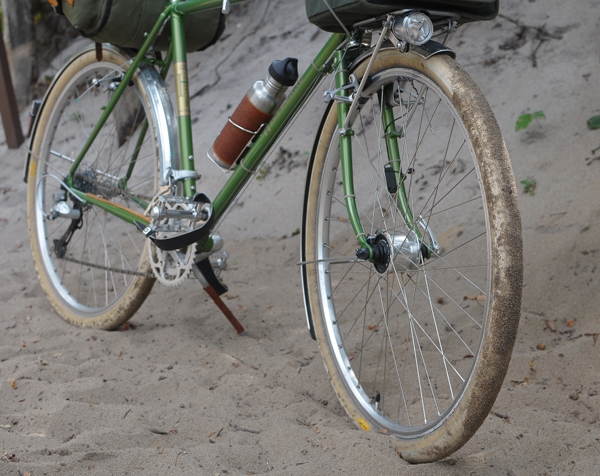
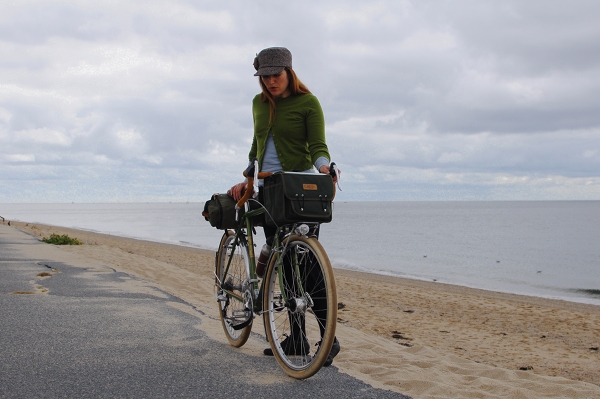
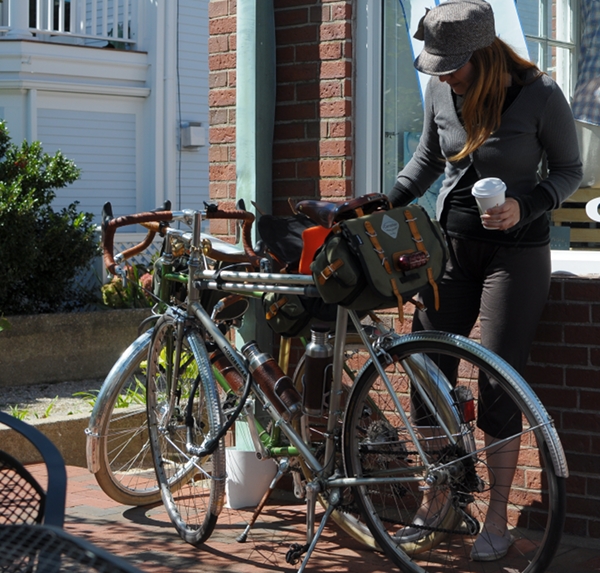
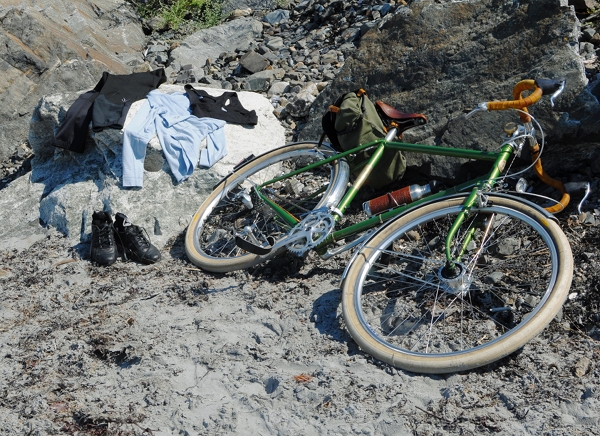
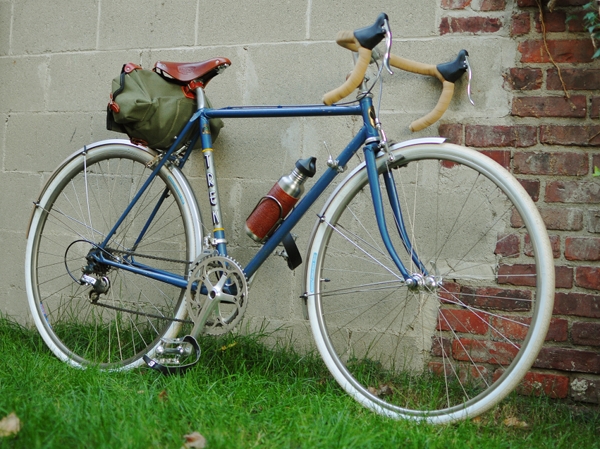
Here is a closer look - And yes, the bicycle is standing in the sand without a kickstand!
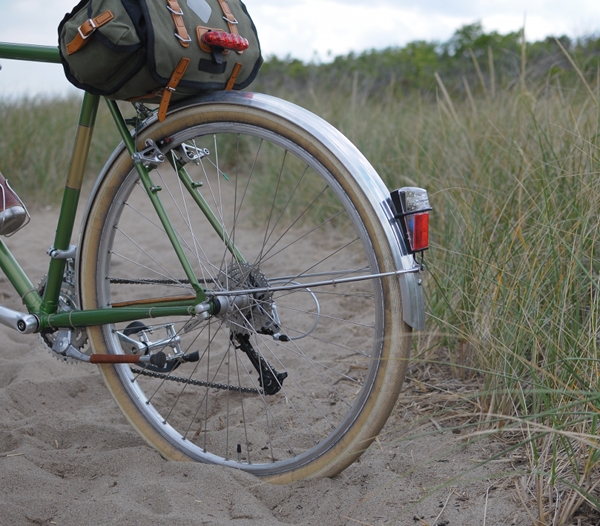
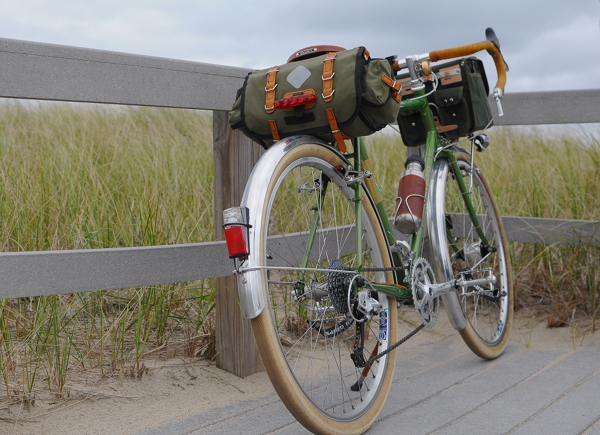
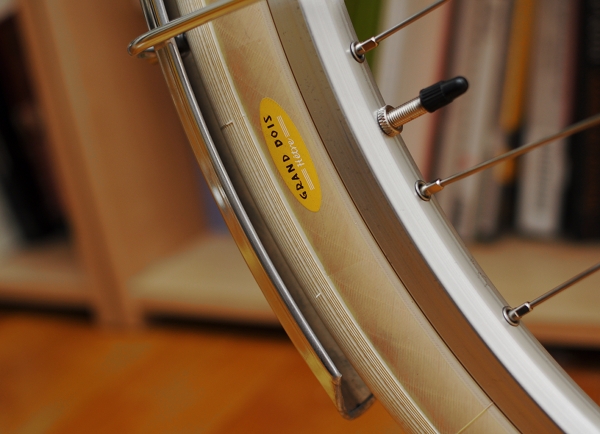
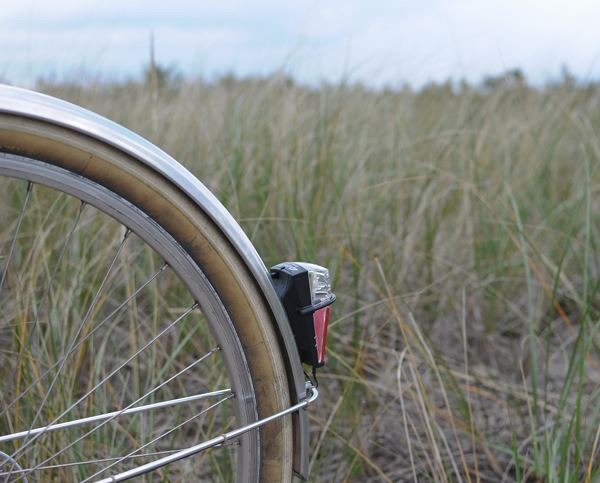
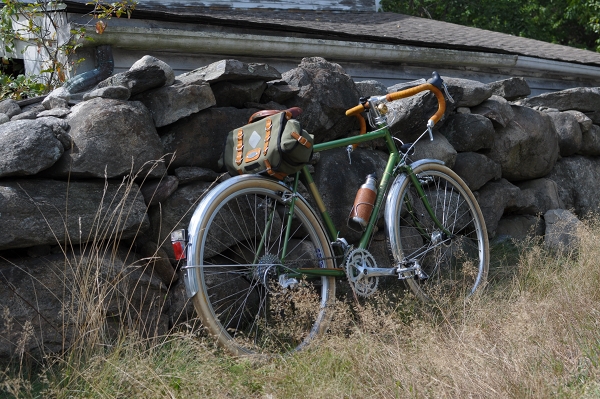
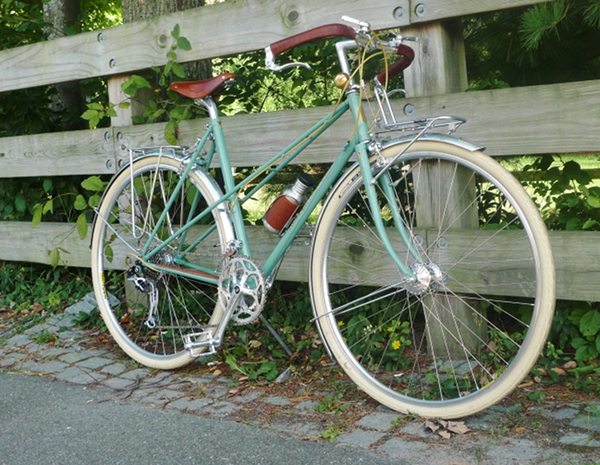
The Grand Bois Hetre tires are 42mm wide and the Velo Orange "Zeppelin" fenders fit over them nicely.
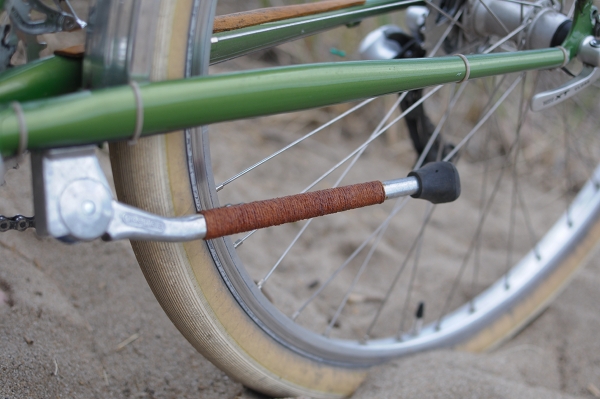
Made to resemble the French randonneuring tires of yore, Grand Bois Hetres are available with either white or red tread, and they are made for 650B wheels only. The white tread version is really a cream colour with tiny little caramel specs, and the red version is really a brick colour. Both look beautiful. The picture above is the only one I have of the tires looking shiny and new.
After 1800 miles, this is what they look like now. Considering that I haven't washed them, I don't think that's too bad actually.
And this is what they look like after going through sand in the rain - though all that caked sand comes off almost immediately once you start cycling on a paved road.
The ride quality of the Grand Bois Hetre tires is truly superb. Better than Schwalbe Delta Cruisers. Better than the famous Fat Frank and Big Apple tires. Faster too. It is worth getting 650B wheels just to get these tires. They are cushy, stable, have excellent puncture protection, and are just as fast as narrower road tires, yet can go off-road. Almost too good to be true!
Also, keep in mind that the width will enlarge your overall wheel diameter - making 650Bs nearly as large as 700Cs with standard, narrower tires. Something to consider if the only thing keeping you from 650B is their slightly smaller size. With the Grand Bois Hetres, they will no longer be smaller.
Grand Bois tires are hand made in Japan and are of extremely high quality. Aside from the fat Hetres, there is a range of other models available, suitable for various wheel sizes. In the US, these can be purchased from a handful of bicycle shops (if you are in Boston - Harris Cyclery had some the last time I was there), or from here directly. If you love the idea of a go-anywhere bicycle that is fast on the road and perfectly at home off-road, the Grand Bois Hetres are surely as good as it gets. Of course, it doesn't hurt that they are beautiful - even after 1800 miles!
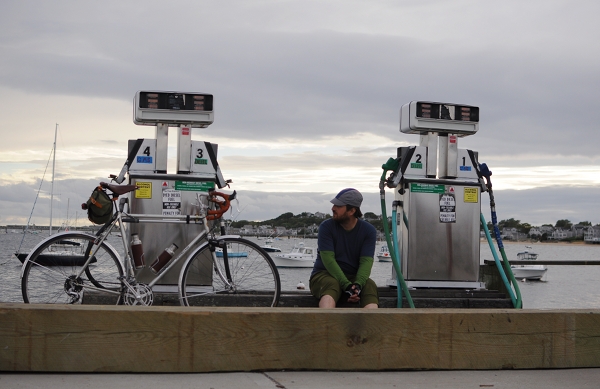
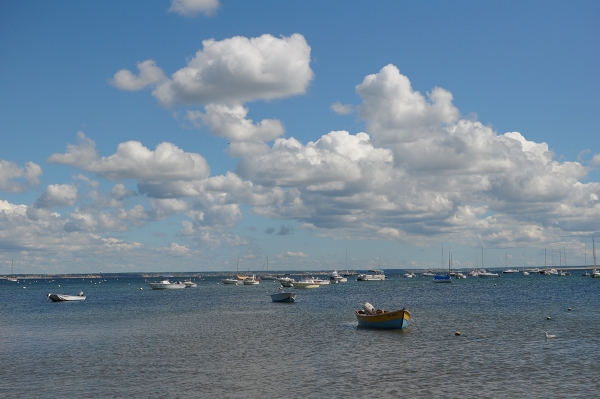
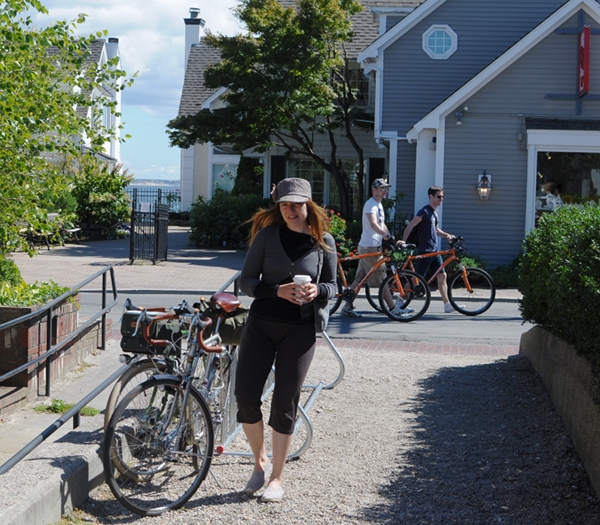
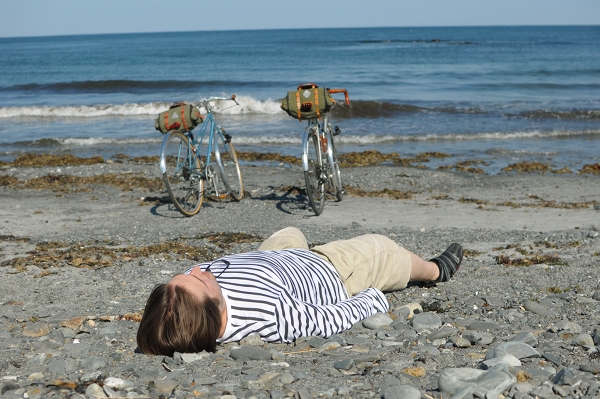
For the remainder of September, we are staying on Cape Cod - and this year's experience is both a joy and a challenge, since we are getting around exclusively on our bicycles.
We are staying on the edge of Provincetown, about 2 miles from the town center. Two scenic, but hilly miles. The town bordering Provincetown is Truro - which is not really a town at all, but a long stretch of dunes, salt water marshes and beach-front properties. The next closest thing to an actual town is Wellfleet - and that's 15 miles away. Fifteen very hilly miles.
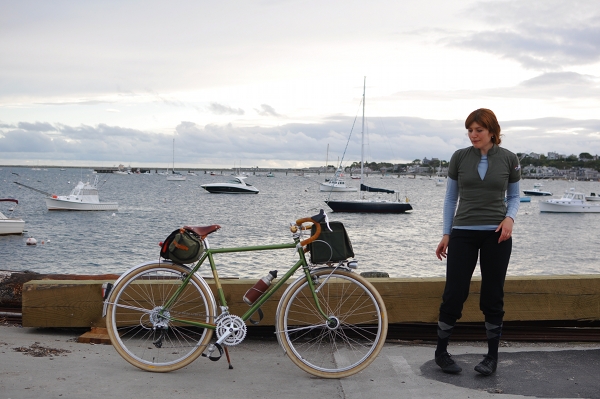
Needless to say, I am pleased with the bicycle I ultimately chose to take to the Cape: "Graham Greene," my Rivendell Sam Hillborne. Though not optimal for cruising through the center of Provincetown itself, it is indispensable for pretty much any other kind of cycling we do here - from transportational cycling to any destination on the Outer Cape (as the tip of the Cape Cod peninsula is known), to the series of long rides we have planned in our free time. I remembered this area being hilly from the time we stayed here with our bikes last summer, but I convinced myself that I was exaggerating. But now it is clear that my memory had not been exaggerating at all: It is darn hilly here; hilly with a capital "H"!
Although last summer we rode our bicycles on the Cape frequently, they were not our exclusive means of transportation: we simply weren't in good enough shape to handle it. However, this summer it is bikes only - and even now our physical abilities are being challenged.
Every morning begins with our cycling into Provincetown for breakfast, work, and various errands.
Our bicycle bags are packed with everything we might need for the day, including camera equipment (thanks to the Zimbale camera insert I recently received - and stuffed perversely into my Carradice saddlebag) and several changes of clothing to accommodate changing weather conditions and different activities. After that, we go about our day, cycling from one place to another and covering at least 15-20 miles purely as back-and-forth transportation. 15-20 very hilly miles, in case I failed to mention that!
On several occasions, we have had the opportunity to take long rides: We have gone on two 30 mile rides and one 60 mile ride so far (more on that later!). The goal is to do a century (100 mile ride) during our stay here.
For me, the weirdest aspect of riding a roadbike exclusively, is my resulting skirt-free wardrobe. But for a few weeks, I can live with it. Ultimately, my stay here will serve as a test of how well I can manage in a rural, hilly, isolated environment... with only my bike to rely on. While for some, a remote oceanfront location is associated with "Vacation", for me it is associated with "Home" and I miss it terribly. I am finding it increasingly difficult to cope with living in the city, even an interesting one like Boston. Something has to change - including my own endurance, if I am serious about living someplace like here and I want to continue cycling. I won't deny that I am utterly exhausted from the time I've spent here on my bike. But I am also excited by the mere fact that I have been able to do it so far. Wish me luck!
Amusingly, though there is no overhead light at our place, there is internet reception. Lovely Bicycle will continue as always, scribbled by candle light.
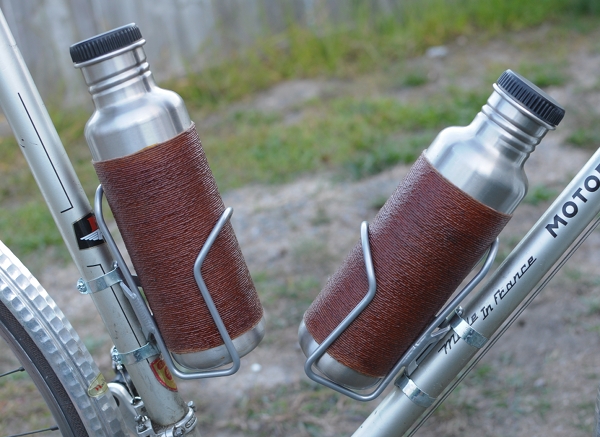
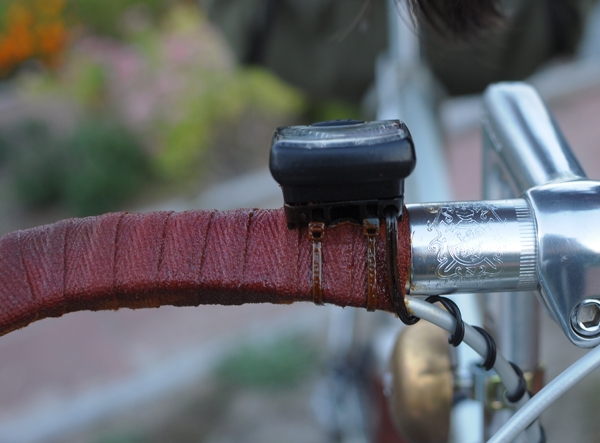
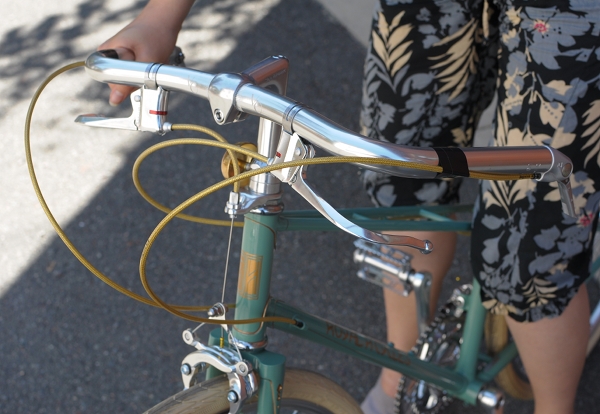
With the rise of the "classic bicycle aesthetic" it is becoming increasingly popular again to shellac handlebar tape, cork grips and twine. Obviously I love the trend. But I also think that people ought to be aware that the purpose of shellacking is predominantly practical, not aesthetic.
Shellac is an all-natural natural sealant (derived from the secretions of a Thai insect), which makes it perfect for waterproofing wood and cloth. When you cover your handlebars in cloth tape, two things will happen to them over a surprisingly short time period: They will get dirty from your hands rubbing road dust into them, and they will get soggy from rain and sweat - which can cause the tape to distend, discolour, and even rot eventually. Shellac will form a protective layer that will prevent this from happening.
At this point, we have applied shellac so often and to so many bicycles, that we have gone through 3 cans of the stuff in a year and a half. For those interested, here is how I like to do it:
. I use a 1" foam brush, rather than a real paintbrush. A paintbrush can leave visible brush strokes, whereas a foam brush makes it easy to quickly put down an even coat. Also, because shellac is difficult to wash out, it is pretty much a given that you will ruin paintbrushes with it. Ruining a foam brush is less costly.
. I like to apply shellac in thin layers, rather than oversaturating. This way it dries faster, and I have better control over the thickness.
. Because I like to feel the texture of my bar tape, I am careful not to go overboard with the shellac application. If you apply so much that your bars feel glassy and hard as a rock, they might not be so comfortable to hold. If you find that you've accidentally done this, try going over it with steel wool or fine grade sandpaper to restore some of the texture.
. Since I ride my bike often and in bad weather, I re-shellac on a fairly regular basis. The shellac tends to wear off first in the spots where I keep my hands the most. When I notice this, I know it is time to add another thin layer.
. Shellacking the night before I plan to ride the bike usually leaves sufficient drying time - but doing it at least 24 hours beforehand is safer. Once or twice, I've ended up holding my hands on the hoods during an entire ride, because the bars were still not 100% dry.
Twine requires shellacking for similar reasons as bar tape: If left in its natural state, it will unravel over a short time period from friction and moisture.
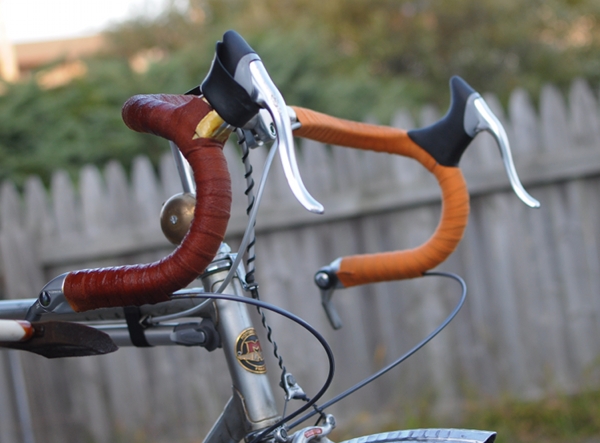
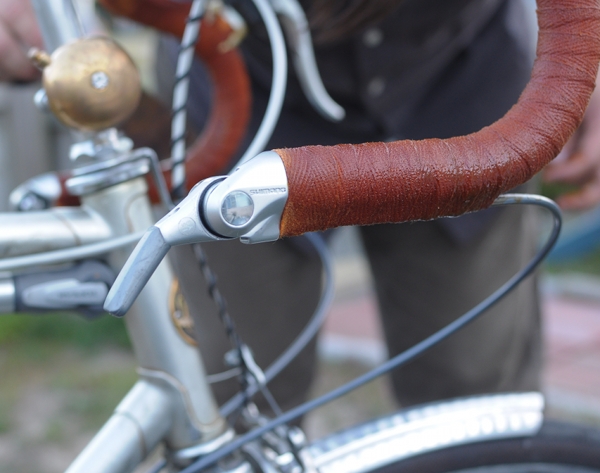
Because of their distinct look, it is understandable that shellacked tape or twine on a bicycle can be seen as a fashion statement. But while I am happy it looks nice, for me the practical benefits far outweigh this aspect. If it were not for shellac, I would destroy my cloth tape on a regular basis. And in case you are wondering - Yes, of course we brought shellac to the Cape! The Co-Habitant has finally replaced his Motobecane's stem shifters with Shimano bar-ends, and we re-did his tape as the sun was setting over the beach next to our house.
Though not all will agree with this, I believe that in order to honestly say that you are able to cycle a given distance, it has to mean that you are able to do it successfully. In other words, if you managed to complete a long ride, but could not walk the next day as a result, that does not count as "success"!
I consider my first half-century (50 mile) ride to have happened this summer - despite having once cycled that distance in Austria some time ago. That earlier trip was a disaster, and I wish somebody had warned me against it. Emboldened by having gone on a handful of short rides, one day I just kept going and going - and didn't stop despite feeling discomfort and pain. Riding a rental bike with a plush vinyl saddle and sub-optimal geometry, I pushed myself well past my limits, ignoring my body's warning signs. And after the ride was over, I could not cycle for over two weeks.
That incident served as a painful lesson: Being able to handle long rides was not about exceeding my abilities. It was about staying within my abilities - while working to gradually expand them. When I finally did my first "real" 50 mile ride this summer, I was ready for it and it felt fantastic. Only then did I feel that I could truly say "Now I can cycle a half century".
Having received emails asking for advice on taking long rides, I offer some tips based on personal experience. Think of these as food for thought!
1. Build up to it. Even if you think you can do it, don't start with a long ride. Start with short rides and gradually increase the distance. Ideally, a ride should still leave you able to cycle the next day.
2. Make sure your bicycle is comfortable. The only way to do this is to get to know your bicycle, which, once again, can only happen over time and over gradually increased distances. The way a bicycle feels on short rides is not an indicator of how it will feel on a long ride. It also takes time to break in a saddle and to "dial in" your optimal sitting position on a new bicycle.
3. Make informed and practical clothing choices. The very same pants that feel great on a 10 mile ride, can make your crotch bleed by mile 50 - as the seams begin to chafe against the delicate skin in that part of the body. By increasing distance gradually, you will be able to spot problematic tendencies before they turn into actual problems and cause damage.
4. Consider terrain. A hilly ride is far more difficult than the same distance covered on flat terrain. You may be perfectly capable of completing a 50 mile ride in Kansas, yet find it impossible in Vermont.
5. Shift gears. The longer and hillier the ride, the more you should be switching gears. Make it a point to switch to a lower gear when going uphill, even if it feels like you do not "need" to. Otherwise, you will waste your energy on tackling hills and will not have enough left to endure the ride. As a rule of thumb, it is good to aim for pedaling at the same rate throughout your ride. If you find your legs moving slower, because it is difficult to turn the pedals, that is a sign that you need to switch to a lower gear.
6. Expect to make adjustments to your bike, and possibly replacements. If something does not work for you, admit it and do something about it. This may include replacing components such as your saddle, handlebars, grips, gear shifters, etc. - or even your bicycle itself. Sometimes we read great reviews of things, and yet these things turn out not to be right for us. Get something that works for you.
7. Eat and drink. Cycling can suppress your appetite and trick you into thinking that you are not hungry... until you crash and find yourself completely unable to continue. This weird phenomenon can really sneak up on you. If you are going on a long ride, make it a point to snack when you take water breaks. Some people like energy bars and energy drinks, while others believe them to be unhealthy. I prefer trail mix or chocolate to energy bars. And adding some lemon juice and (a pinch of) salt to your water bottle makes for an effective, all-natural electrolyte replacement drink.
8. Most importantly, listen to your body and go at your own pace. Have realistic expectations and be patient. So you envisioned yourself crossing the Alps this summer, yet you can't manage more than 20 miles on your local rail-trail? So what! Enjoy those 20 miles and keep doing them over and over. One day you will surprise yourself.
Autumn is the best season of the year for cycling. Happy trails!
If you own a pair of capri pants that are comfortable to cycle in, but you don't like the way the bottoms flutter in the breeze or get caught in the drivetrain, then here is a quick and dirty way to turn them into cycling knickers:
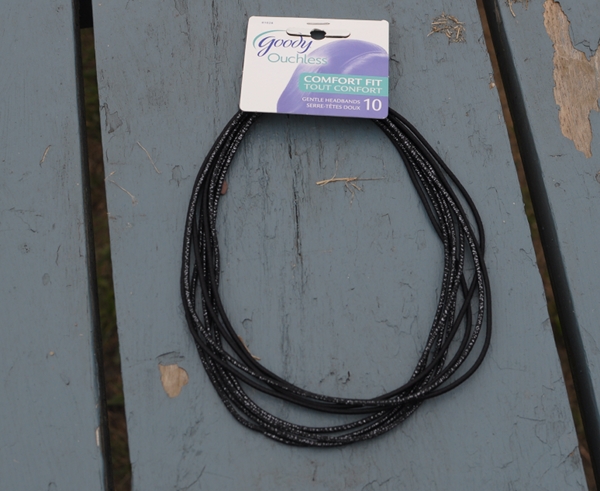
You will need a long elastic band, which can be purchased at a shop that sells sewing supplies. Alternatively, you can use narrow hairbands, as shown above (these come in a pack of 10 that costs around $2).
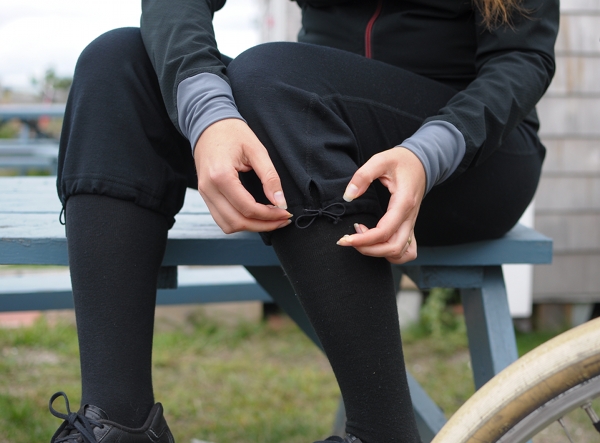
Check the hemming at the bottoms of the pant legs. Sometimes the manufacturer will leave an opening in the hemming, at the outer seam. If not, carefully create an opening. Don't cut into the actual fabric; just undo a small portion of the outer seam through which to thread the elastic. This was a quick and whimsical project, and I do not have a step-by-step photo documentation. But I hope these after-the-fact pictures adequately demonstrate what is involved.
Once you have threaded the elastic through the hemming, simply tie it on the side so that it is snug, but not constricting. You can then choose to either hide the knot inside the seam and sew it back up, or leave the knot exposed. The benefit of the latter is that you can keep converting the pants back and forth between normal capris and cycling knickers.
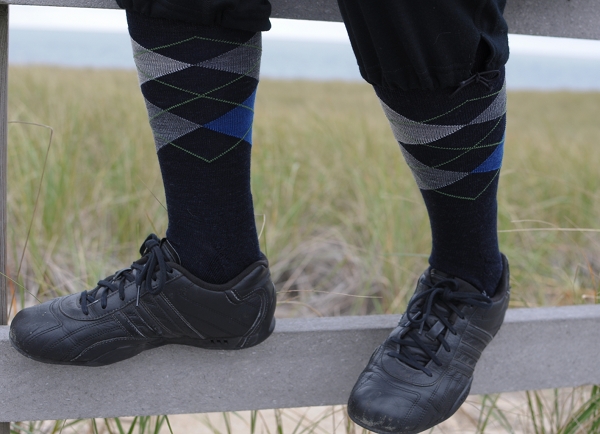
Aside from staying clear of the drivetrain, an additional benefit to these knickers is that you can continue to wear them in colder weather. Simply add long socks, and the elasticised bottoms will protect your legs from the wind. Cape Cod has greeted us with temperatures in the 50° F range, and it looks like I will be living in these for the next 2 weeks!
Or maybe it was reading (and re-reading) Harriet Fell's account of "Paris-Brest-Paris 1975", in which she described packing her handlebar bag with over a dozen items, ending the list with "and a chicken, whole and roasted".
Just look at its boxy shape! And at the way it fits perfectly into the space between the handlebars - perched ever so appealingly on that miniature front rack above the front fender.
And who can resist the multitude of little pockets and closures? It is as if the bag invites you to trust it with your most cherished personal belongings: "Don't worry about anything when you are with me, Friend. I will keep these safe on the road."
I suppose at the root of what attracts me to the handlebar bag, is the visual suggestion - reinforced by anecdotal accounts that have reached legendary proportions - that it turns the bicycle into a mobile home. You could go anywhere, and still have anything you could ever need, neatly organised and right at your fingertips... Including a whole, roasted chicken, if so desired.
Starting this weekend, we will be staying on Cape Cod for a bit, like last summer. It is not a vacation in the classic sense since we will still be working, but it will be a welcome change of scenery - and of course there will be time to cycle.
It was only decided for certain that we will go last night, and now I have a day to get ready. While for many women, I imagine the most pressing question would be what clothing to pack, for me that is pretty much settled. Our photo equipment and props are also ready to go. But what is a girl to ride? Now, that is another matter!
I could take Graham. Pros: He can handle the hilly, long distance rides we plan and has an excellent lighting system for those pitch-black country roads. Cons: A roadbike is not the best idea for in-town cycling (we are staying in Provincetown), plus I would be so nervous to leave him locked up at a bike rack!
I could take the brand new (yet unnamed) mixte. Pros: I can ride her both in the town and in the country, and I know she is comfortable. Cons: We have not installed the lights yet, and are waiting for a part that may or may not arrive today. And I would be just as nervous to leave her locked up in town as the Rivendell.
Or, I could take Seymour Blueskies. Pros: He would be fast on those hilly roads, and I would not worry about leaving him locked up on a bike rack in town. Cons: he does not have dynamo lighting, is not quite as comfortable as the other two options on super-long rides, and, as a roadbike would not be ideal for in-town cycling.
Taking one of the vintage 3-speeds is out of the question, because they would not be able to handle the substantial hills of the outer Cape, so the three bikes above are my options. Since this will be home away from home for a while, ideally I would have two bikes: one for in-town and another for long-distance hilly rides - but that is not realistic. Whichever I take, adapting to a one-bike lifestyle for a bit should be interesting!