lindaikeji35

  • Subscribe to our RSS feed.
  • Twitter
  • StumbleUpon
  • Reddit
  • Facebook
  • Digg

Friday, May 6, 2011

Urbana: Review of a True Transport Bike

Posted on 10:54 AM by dvdsvdsdv
A month ago, I received a bicycle from the Canadian manufacturer Urbana, to test ride and review.  When the offer was initially made, I visited Urbana's website and was both confused and intrigued. Did they not see that I liked classic bicycles and not modern monstrosities? Did they realise the risk they were taking asking me to review this thing? Still, even then I was aware that this wasn't some generic comfort bike, but a unique design with a distinct look and unusual geometry. The manufacturer insisted that I'd like it once I tried it, and my curiosity was piqued.

If you've been reading this blog for the past month, you know the result: I ended up riding the Urbana far more than I had intended... to the annoyance of some readers who found it not sufficiently "lovely" to grace this website. But to those readers I say: Come on, open your mind. Though not "pretty" in the classic sense, the Urbana is aesthetically harmonious, well-designed and comfortable - which in my book is lovely indeed. The neon yellow was an accidental choice on my part: It was described as "olive" and looked army green on the website. But everything else about this bike I like. In fact, had I gotten it in black I would have had a problem parting with it - so perhaps the neon colour is a blessing in disguise.
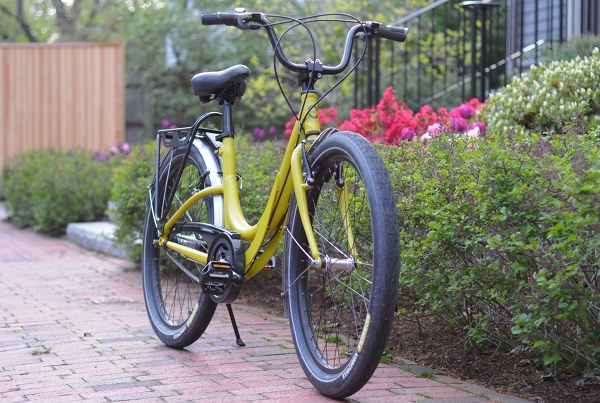
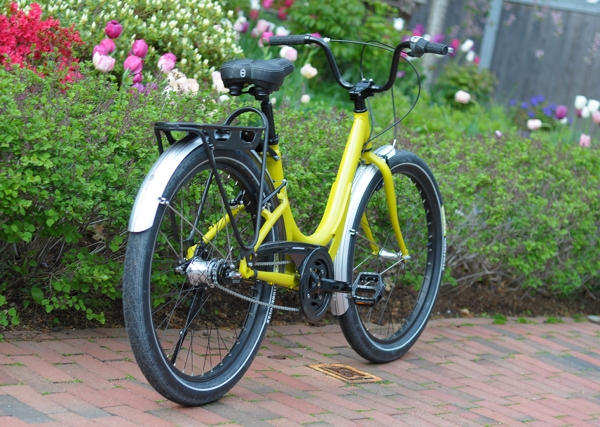
So, what kind of bike is the Urbana? Technically speaking, it is a hybrid between a mountain bike, a BMX bike, and a Dutch transport bike. The mountain bike legacy comes from the downhill MTB designer Jerome Roy, in the form of reinforced frame and fork construction with wide 26" tires. The BMX attribute is in the handlebar setup and in the squat stature.

The Dutch aspect is in the relaxed angles, deep U-frame, fenders, and heavy-duty rear rack. It may seem like a mish-mash of incompatible styles, but it all comes together harmoniously - and, to my eye, adorably in a "friendly little forest troll" kind of way.

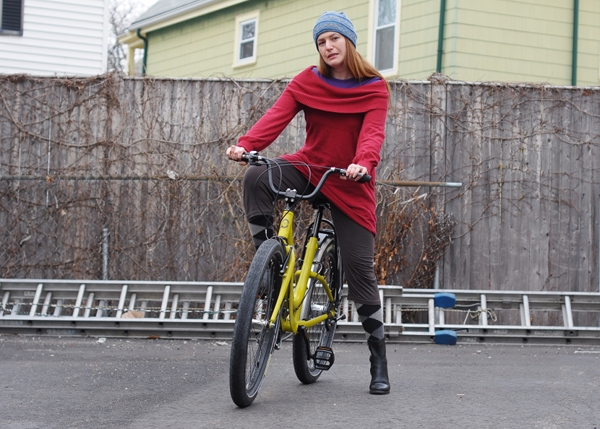
The sitting position itself feels Dutch, in the sense that the seat tube is relaxed (I would guess 70° or less), and I could attain nearly full leg extension while still being able to touch the ground with a toe.

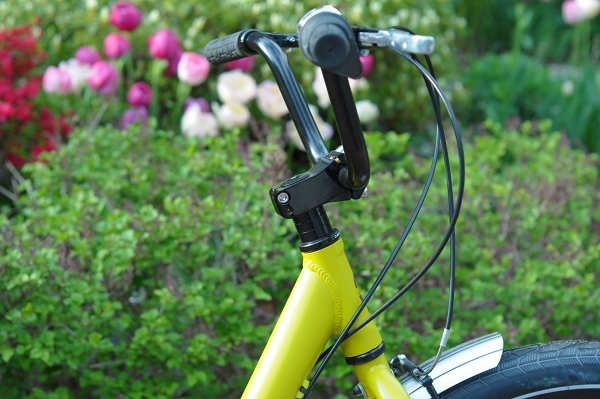
At the same time, the low BMX handlebars place the rider in a considerably more forward-leaning position, than would a Dutch bike. The threadless stem allows to easily alter the positioning of the handlebars - leaning them toward or away from the rider, depending on preferences and the person's height. I had my bars set pretty much straight and found them comfortable.

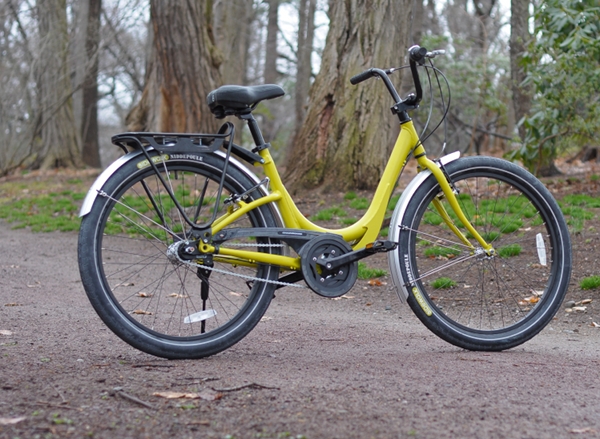
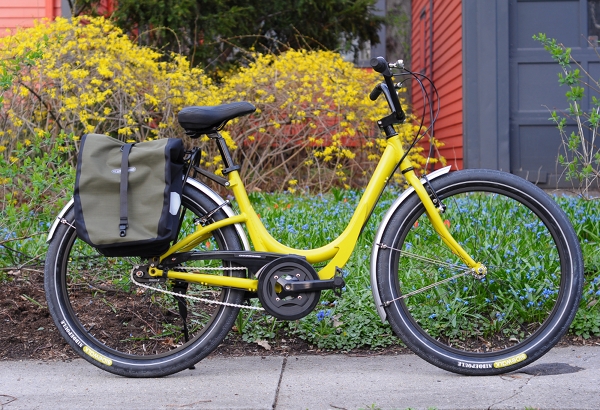
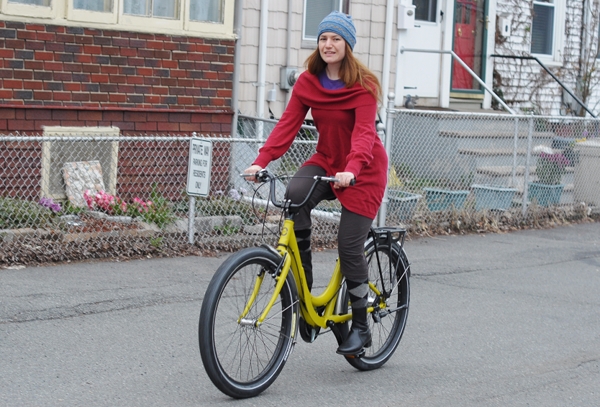
This picture shows the relaxed geometry and long wheelbase of the bike fairly accurately, as well as the saddle-handlebars positioning. The frame of the Urbana is welded aluminum, executed in a manner that I would describe as industrial. Some readers have mentioned that the bike reminds them of "bikeshare" bicycles, but any visual similarity is superficial. The Urbana is constructed differently and handles differently. It is a bike meant to haul serious weight and to withstand the roughest terrain, which bike-share machines are not.

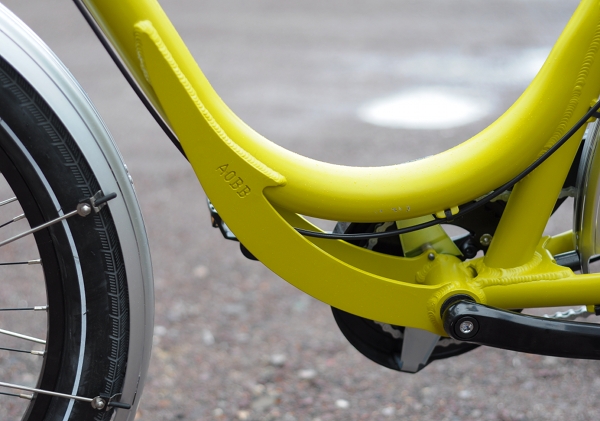
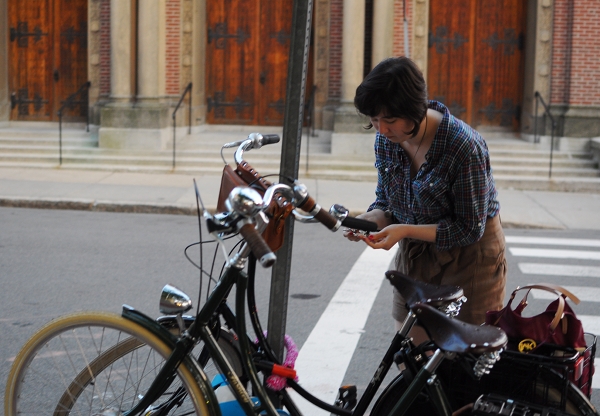
The letters carved into the frame are part of a security code for registering the bicycle (the second part of the code is located elsewhere). Urbana has an interesting system for registering and securing these bicycles that makes stealing them an unwise move.

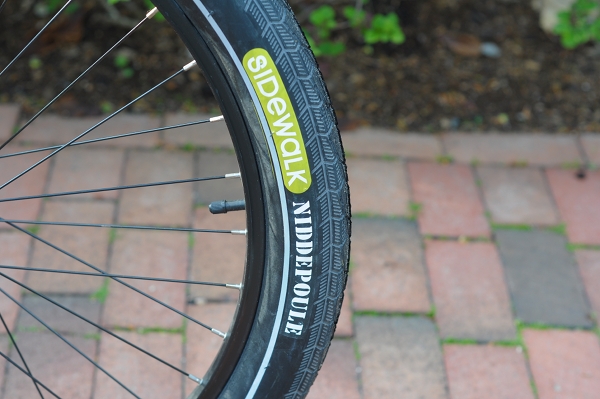
Of course, one of the main defining features of the Urbana are its 26" x 2.6" Niddepoule "Sidewalk" balloon tires with reflective sidewalls. They are extremely wide, extremely cushy, and roll fairly fast. I have tried most good modern fat tires at this point, and in terms of handling these feel similar to the 26" Schwalbe Fat Franks - only wider. Potholes are not an issue.

Reviewers of the Urbana tend to delight in how easy and fun it is to hop curbs with the tires, and of course there is that. But I feel like stressing this aspect almost trivialises them. The tires are genuinely useful on bad roads. There is no road shock, none at all - which is a big deal for those who find going over potholes painful. I have rolled over what I would otherwise have considered obstacles on the road and swerved to avoid. And yes, I have gone up on curbs - just not on camera.

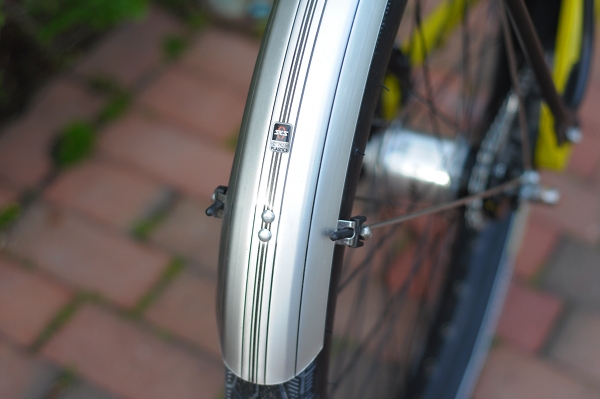
Urbana bicycles are semi-customisable, and I requested fenders. They use SKS fenders, which provide good coverage.
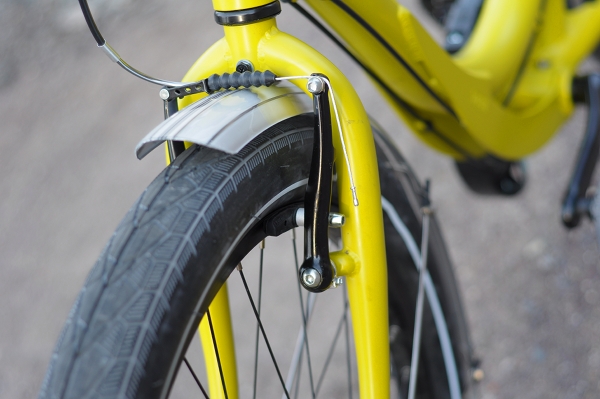
Some have complained that the front fender is too short - but while visually that is true, I did not find that I was sprayed with water from the front tire when cycling in the rain. We did find it difficult to set up the V-brakes in a way that did not interfere with the front fender. If you opt for the fenders, consider choosing disk brakes instead of the V-brakes. 
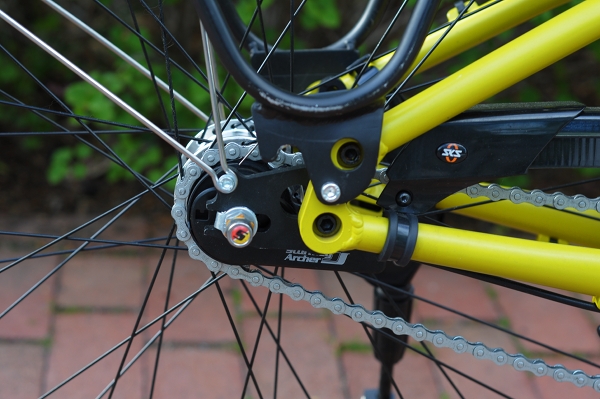
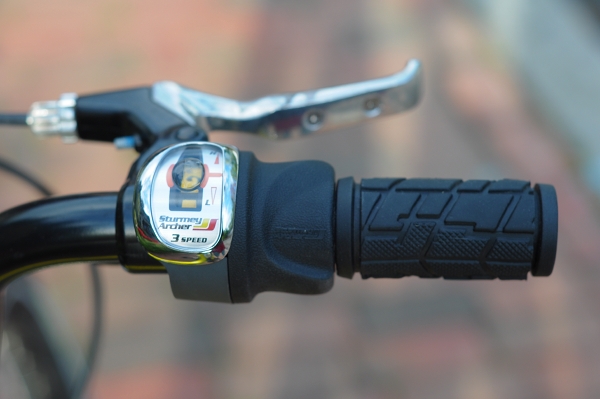
For gearing, I asked for the 3-speed option - which came with a Sturmey Archer hub. The hub worked flawlessly and was more than sufficient for me. The gearing felt similar to that on my Gazelle - I stayed mostly in second gear. Notice how the hub is connected to the (lack of?) rear dropouts. This frame construction is so different from what I am used to, that I do not even know how to describe this.

The SA twist shifter has a rainbow-esque look to it that I think suits the bike well. Not a whole lot of grip space next to the shifter, but more than on some other bikes I have tried. Interestingly, my hands did not hurt in the straight-in-front position these bars put me in, whereas usually I find this position unbearable as a result of nerve damage in my hands. It must be not just the hand position that bothers me, but the combination of it plus road shock. Since I experienced absolutely no road shock on this bike, the position alone did not cause discomfort. At least that is my theory as to how I was able to ride this bike, but not any other bike with the same style of handlebars.

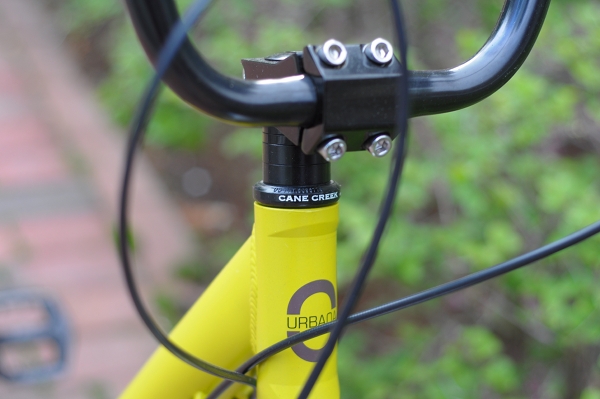
Overall, the components used on the Urbana are pretty good - from the Cane Creek headset to the SKS  fenders and chainguard. There are no flimsy, generic parts; all is solid. The Co-Habitant doesn't love the V-brakes they used, but otherwise he agrees. I thought the V-brakes were fine, though they are generally not my favourite brake type simply because they are too strong and don't modulate well. The Urbana stopped too well, and I had to be careful with that.

Notably, the Urbana is not equipped with a lighting system, which I see as its one major flaw. A dynamo lighting option would make it a fully equipped urban utility bike.
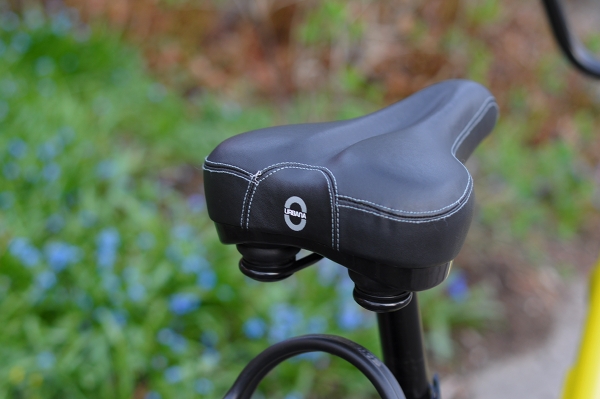
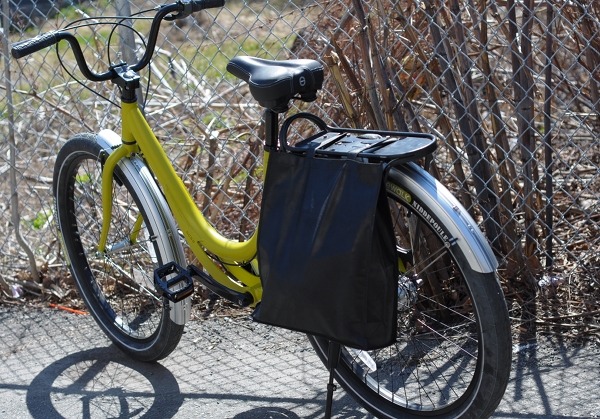
The proprietary saddle is tightly sprung and mildly padded vinyl. I found it quite comfortable for rides under 5 miles and felt no desire to change it. The Co-Habitant didn't like it, but I think that's because he is quite a bit heavier than I am and his weight made the springs over-active.

Last, but not least, there is what Urbana calls the Reinforced Rack (RNR). It looks fairly inconspicuous and normal as far as racks go, but is designed to withstand 160lb of dynamic weight. This includes anything from furniture, to squirming children, to - well, me.

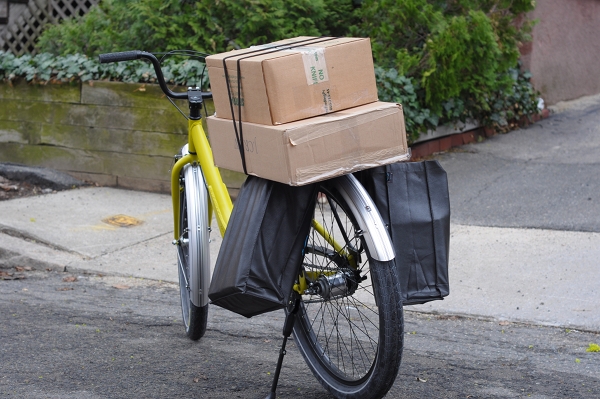
The above was a fairly easy and normal arrangement for me to set up on the Urbana, and I wrote about it in detail here. I did not feel the weight shifting around or slowing me down while I was cycling. My Gazelle is pretty good at carrying loads as well, but not this good.

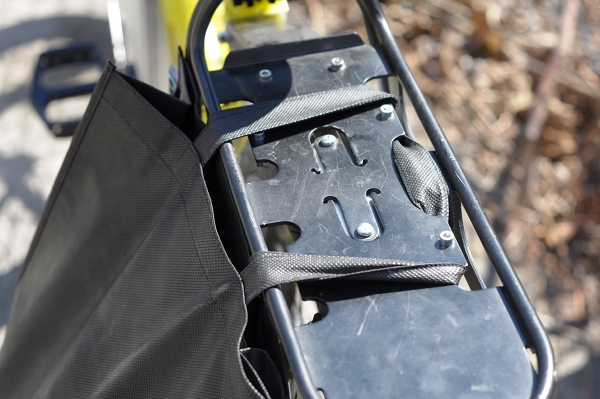
Aside from the generous weight rating, it also helps that attaching stuff to the RNR rack is easier than to any other rack I've owned.  It's a ridiculously simple design that anyone could have thought of... but didn't. Each side of the rack's platform has a carved-out section with bolts poking out undearneath, making it possible to attach virtually any bag to the rack by wrapping the handles around the bolts.

The utility and freedom afforded by this ridiculously simple design is just amazing: No need for dedicated panniers.

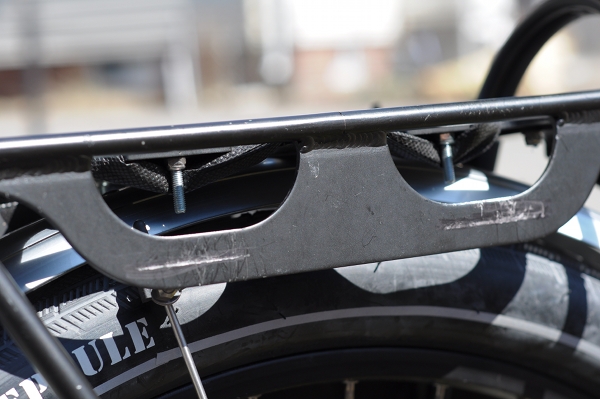
Of course, if you do with to carry panniers, it's not a problem: The rack's tubing will accommodate almost any attachment system (with the exception of fixed 3-hook systems - which I believe only Fastrider uses). So the cyclist is really given functional freedom here. Panniers? Fine. No panniers? Also fine. The rack also has a handy built-in notch for bungee cord attachment at the bottom, which you can see here.

With its easy-to-load rack, and the durability that allowed me to keep it locked up outdoors 24/7, I was soon using the Urbana all the time for transportation - instead of my own bikes. Before I knew it, the Co-Habitant was using it too and you can read about us sharing the bike here. All this was in no way part of my agreement with Urbana, but entirely a product of how convenient the darn bike was to use.  In the end, we end up using what's most convenient - simple as that.

The weight of the Urbana as I had it set up was roughly 42lb. There is one particular section on the seat tube by which it is very easy to pick the bike up, making the weight totally manageable. To pick it up any other way is uncomfortable. But best of all, is to park it outdoors. I kept it locked up in the back of the house for the entire month it was in my possession, and it weathered this just fine.

The ride quality feels more than anything like that of a good mountain bike... fitted with unusually fat, fast tires. Maybe because I rode a mountain bike in high school, the experience of riding the Urbana made me feel young and "bad-ass" again, which I enjoyed. Gosh, if someone gave me this bike when I was 16 years old and riding this, I would have been in heaven! Aside from the fun ride, this is probably the most stable bike I have tried thus far, all things considered. The responsiveness is decent, but obviously not roadish. Maybe half way between a mountain bike and Dutch bike. Acceleration is surprisingly good, and going uphill was similar to my Gazelle (i.e. good enough for my terrain). If you have ever tried a Retrovelo, its ride quality comes the closest to the Urbana than anything else I've tried - save for the posture and hand positioning.

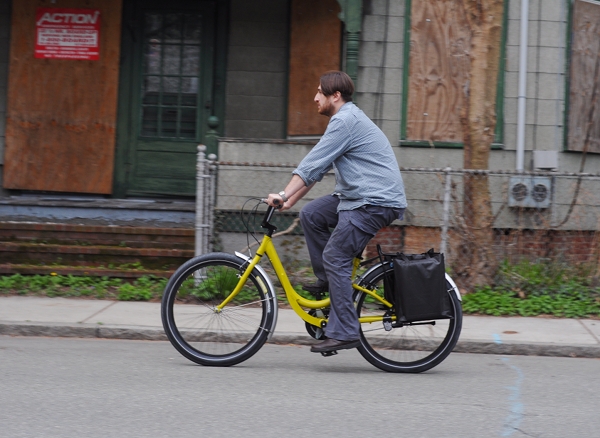
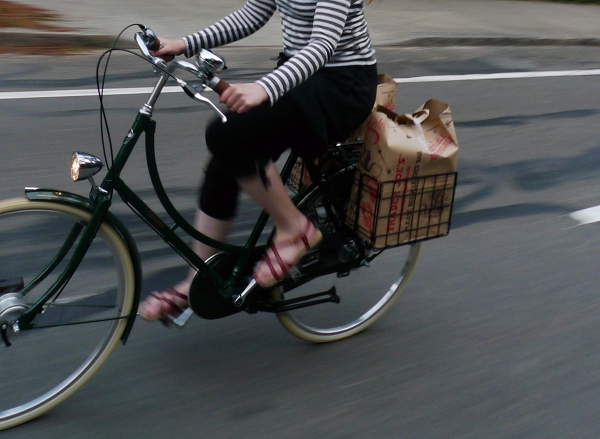
Co-Habitant on the Urbana, with grocery bags.

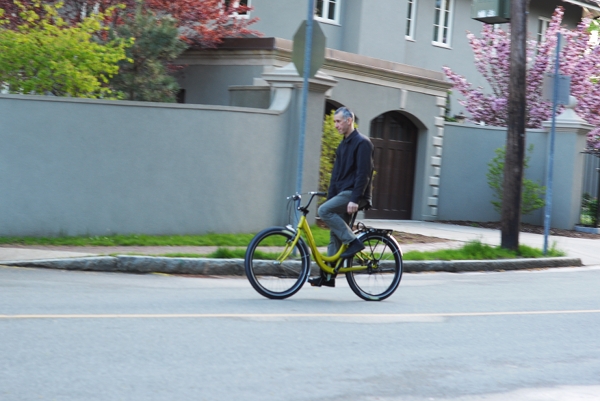
Our neighbour Somervillain on the Urbana, riding no hands.

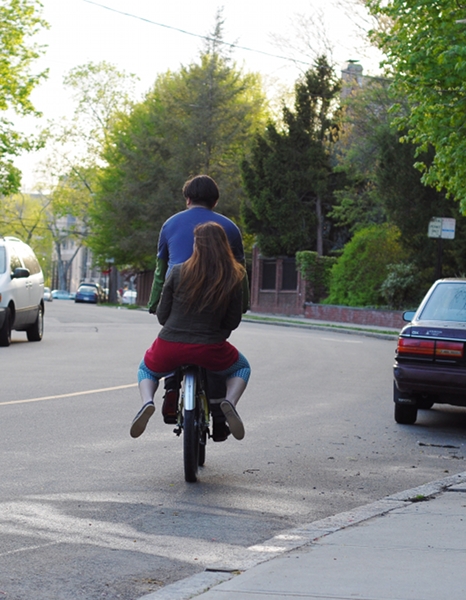
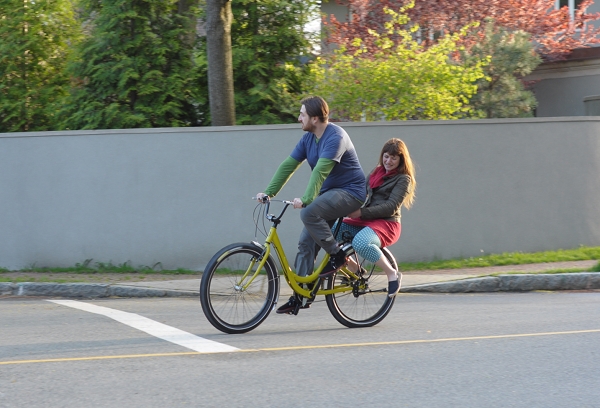
And the two of us together again. Can't say that I particularly enjoy riding on the rear rack (I like to pedal, not to be carted around), but it is definitely doable and the bike remains stable. We went to the grocery store this way once when we didn't feel like taking separate bikes, and it was fine. I screamed when he tried to hop a curb with me on the bike, but you can hardly blame me for that.

Overall, I do prefer the ride quality of traditional, upright loop-frame bicycles to the Urbana, simply because of the more comfortable hand positioning and the upright posture. Over long distances, I begin to find the MTB posture tiring - whereas on my traditional upright bicycles I can keep going for 30 miles. However, the utility and convenience of the Urbana made me prefer it for short-distance trips - especially when carrying anything of significance on the bike. Had the bike been equipped with lighting, its utility would have been truly remarkable, but the lack of lights made it only usable during daylight hours.

The US retail price of the Urbana will be around $1,000-1,370 - depending on how it is equipped. I suspect that the market will find that price range too expensive for this particular bike, but I could be wrong. Would I buy it for myself? Possibly - especially as a winter bike and dedicated "cargo chariot" that I would share with the Co-Habitant. I would get it in black, and I would want them to knock several hundred off the price. That is my honest feedback.

More than anything, the Urbana challenged my priorities - an experience that will have a long-lasting effect on my design sensibilities. I appreciate the opportunity to review this product and wish Urbana the best of luck.
Read More
Posted in bicycle reviews, Co-Habitant, Urbana | No comments

Wednesday, May 4, 2011

If Not Bike Month, Then What?

Posted on 10:13 PM by dvdsvdsdv
A couple of weeks ago I wrote this post explaining why I do not believe that "Bike Month" is effective at making transportation cycling accessible to non-cyclists and beginners. In the discussion that followed, many different opinions were expressed - which I appreciate. In addition, a couple of readers suggested that, since I criticised the approach, perhaps I could follow up with my own ideas. If not bike month, then what alternative would I propose? That was a good point, and I have now prepared my response. This is far from the first time I've considered the issue. But it's one thing to have my head full of ideas, and quite another to express them lucidly. Let me give it a try.

A Support System for Cyclists
If the goal of a city, community, or organisation is to make cycling an accessible form of transportation, I propose a year-round support system permanently in place. This support system could exist in the form of a small department within the local government structure, or in the form of an independently funded non-government organisation. The sole mission of this department or organisation would be to provide a range of services - in the form of literature, materials, counseling, classes and workshops, and more - to persons interested in transportation cycling. It is crucial that the office or organisation providing these services be non-partisan - which includes independence from political groups, environmental organisations, or any other entities with specific agendas to pursue. The goal of this office or organisation would not be to promote cycling, but to support cyclists or those considering cycling - which is a crucial distinction. Trained employees would work with person, families, and groups to determine their level of comfort, their concerns and their goals - responding appropriately and providing them with relevant resources. The existence of this office or organisation would be made known to the public via an online presence, via brochures available at relevant local venus, and via announcements in the local media.

While I have quite detailed and concrete ideas of how this fictional entity would function, outlining all of them would require its own post - or more like a multi-page proposal. But I think you get the gist of what I envision. Having a solid, well-developed support system in the community that any cyclist can rely on is, would in my view, be more effective than a month-long annual event that is dense in activities while it lasts, only to end abruptly. A year-round support system would also send the message to the community that cycling is an accepted and attainable means of transportation.

A "How, Not Why" Approach
It is my belief that the chances of non-cyclists finding the idea of transportation cycling appealing are diminished, rather than improved by the "hard sell" tactics employed by the majority of bicycle activists (and by the very notion of bicycle activism, for that matter). When people try too hard to convince us that something is "good for us" or morally superior, our natural response is to be skeptical, to resist. After all - if it's so wonderful, then why are they trying so hard to persuade us and why isn't everyone already doing it? For this reason, I think it is misguided to "sell" cycling. Moreover, cycling doesn't need to be sold: It is a trend on the rise, particularly in large cities that are centers of popular culture. People everywhere are already enjoying riding their bicycle for transportation, and we need merely to communicate this fact as a given. Instead of telling people why they should cycle, make it an implicit assumption that they already want to do it (of course! doesn't everyone?) and focus on the how. I believe that this approach must underlie any initiative or outreach program designed to encourage new cyclists.

Ideas for a How-To Brochure
One thing discussed with particular zeal in the comments of my post about bike month, was the Bike to Work Week commuter booklet - a transportation cycling guide offered as promotional literature by the organisers of Bike Month. Here I described the ways in which nearly every page of the brochure portrays transportation cycling as a challenging and possibly dangerous athletic activity, which I believe makes the brochure intimidating rather than inviting. In response, I will outline my vision for an alternative brochure.

Title:
"A Guide to Cycling for Transportation"

Introduction:
Start by mentioning that cycling for transportation is becoming increasingly popular, and many people are wondering how to go about starting. This brochure is for them.

How to begin:
Explain how easy it is to commute by bicycle, dispelling myths that athleticism, energy bars, or special cycling clothing are necessary in order to commute to work on a bike.

Choosing a bicycle:
Inform of the existence of comfortable transportation bicycles, and explain which accessories are necessary in order to commute in work clothing. List bicycle shops that specialise in commuter bicycles and perhaps websites that focus on reviewing them.

Road rules:
Using clear and simple language, outline the basic cycling laws in your area, providing link to full version.

Safety:
Be objective and positive. Cite statistics that reveal bicycling to be a relatively safe activity. Stress the necessity of good brakes, proper lighting, and adherence to road rules first and foremost. Explain that opinions on helmets are mixed, and while some choose to wear them, others do not.

Illustrations:
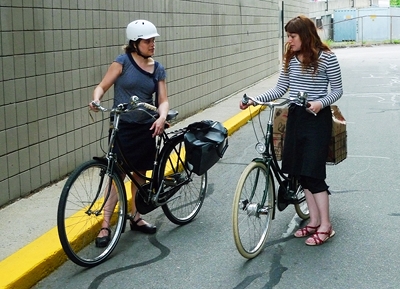
Choose appealing images where persons are shown cycling at a relaxed pace while wearing street clothing and riding transportation bicycles with appropriate accessories. Include signs of normal, everyday activities: parents transporting children, persons in suits cycling with briefcases strapped to rear racks, grocery panniers with flowers sticking out, and so on. Images should communicate that cycling is easy, convenient and pleasant. Helmet use can be portrayed in a manner that represents freedom of choice: Some cyclists can be shown wearing one and other cyclists not, in a way that both come across as natural (see image above, or this image from a recent bike advert).

Further Resources:
Provide a list of popular websites focusing on transportation cycling.

Given that small, specific things are easier to implement than grandiose plans, I think that creating a brochure such as the one I outlined to counteract the one promoted via Bike Month would in itself be useful to those who are considering cycling for transportation and do not know where to begin. But making one - as well as thinking up the means of distributing it - is a project that would require hours of my time and is beyond the scope of this blog. Putting forth ideas is far more difficult than merely criticising, and I am exhausted from writing this post. Your thoughts on all of this are, of course, welcome.
Read More
Posted in beginners, social commentary, transportation options | No comments

Tuesday, May 3, 2011

Simple Solution for Unforeseen Groceries

Posted on 9:05 PM by dvdsvdsdv
I have now stopped using the Urbana bike that I was test-riding in April and have gone back to my Gazelle. While overall I prefer the Gazelle, I do miss some of the Urbana's neat features and have been trying to devise ways of making the Gazelle just as accommodating. Among other things, I want to find a DIY solution that will emulate the utility of Urbana's fantastic rack that accommodates any grocery bag without requiring panniers. I thought hard, but could not come up with anything... until fate did it for me. If you haven't fainted yet from my use of plastic bags, perhaps you'll appreciate this.

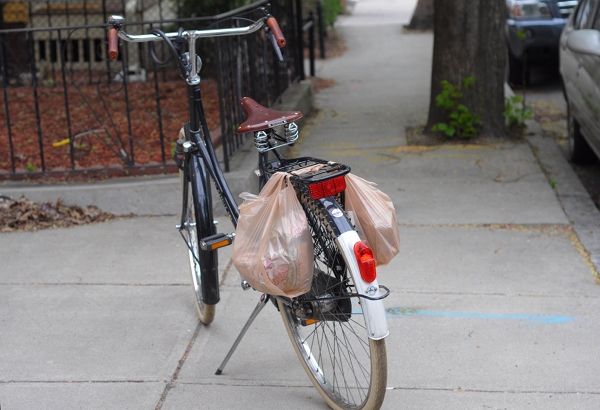
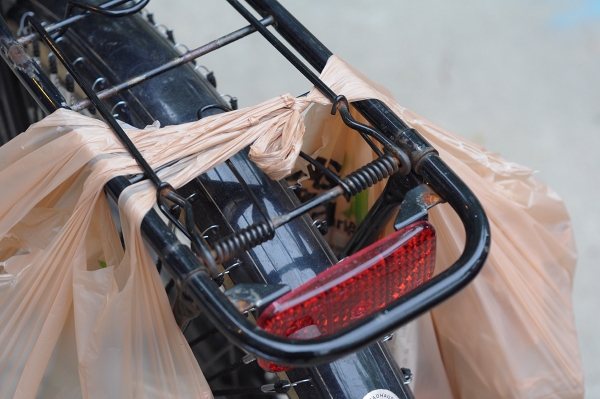
Yes, two bags tied together and turned into "panniers." It was totally impromptu. We were cycling past a grocery store just as it was about to close, when we realised that we had neither anything to eat at home, nor anything to carry it in if purchased. We ran in and bought some food, thinking we'd carry it home on the handlebars. But then, in a flash of brilliance, the Co-Habitant created the objet d'art you see here. We cycled home ridiculously happy. I guess this is what one of my readers meant when he wrote that "a peasant in any number of countries with a million plastic bags can figure out and equal number of ways of carrying their stuff."

Question: Why would one even buy dedicated grocery panniers, if they can take a pair of reusable canvas bags, connect them by the handles (with an S-hook or a bungee cord), and secure them to the rack either via rat trap or via the same bungee? I realise that the plastic bags in my pictures look horrible, but a pair of nice reusable shoppers could look as good as panniers while also being more versatile and costing just a fraction of the price. Does it just not occur to people in the same way it did not occur to us? While I am delighted to have this method of carrying groceries in a pinch, I am also feeling foolish that I did not think to do it earlier. It takes skill to recognise simple solutions, and that's a skill I would like to develop.
Read More
Posted in bags, DIY, food, Gazelle | No comments

Monday, May 2, 2011

A Luscious ANT Truss Bike

Posted on 10:18 PM by dvdsvdsdv
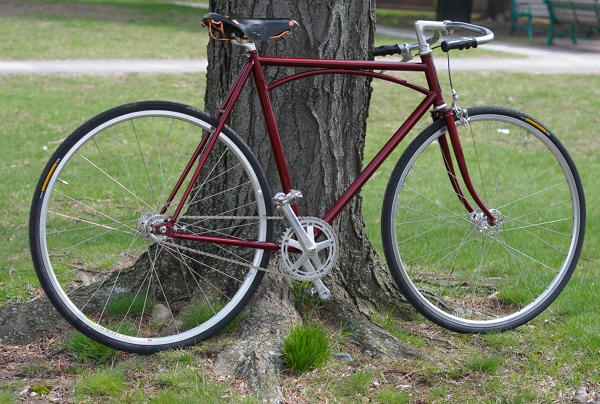
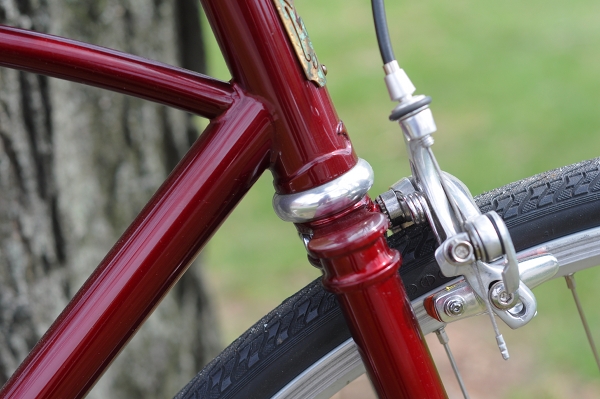
A little while ago I finally test rode an ANT Truss Bicycle for the first time, and the memory now seems like a dream. I cannot describe how much I love this frame design, specifically as executed by ANT. I have a separate post about truss frames, so I won't go into it again here. But something about that truss, in combination with the double plated fork crown, just "hits the spot" for me visually, and I've fantasised about riding one more times than I care to admit.

Luckily, I know Jim A. - a great mechanic at Harris Cyclery - who owns a glorious truss frame ANT, which I was able to ride. In retrospect, I can just kick myself for not taking the pictures before lowering the saddle, because the bike looks better with more seatpost showing. But in my excitement I was not thinking clearly and I hope you can overlook this aesthetic blunder.

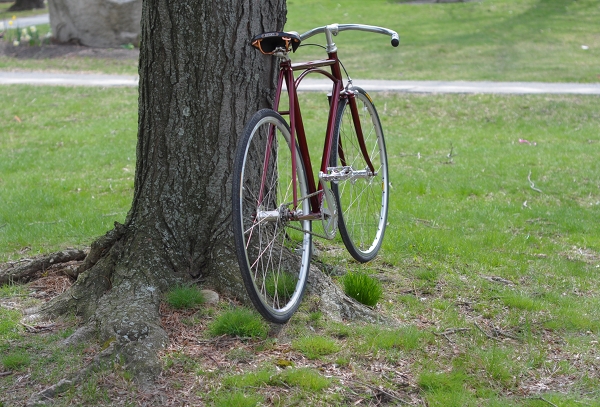
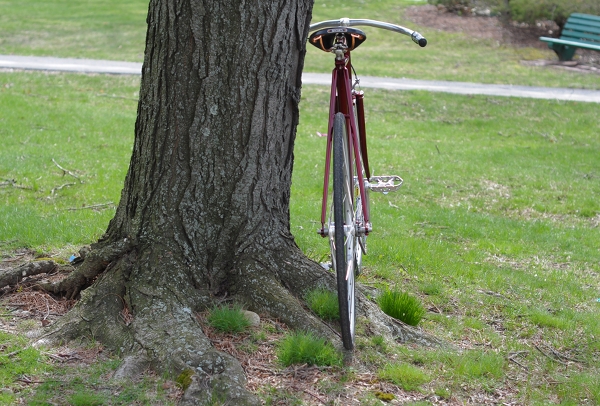
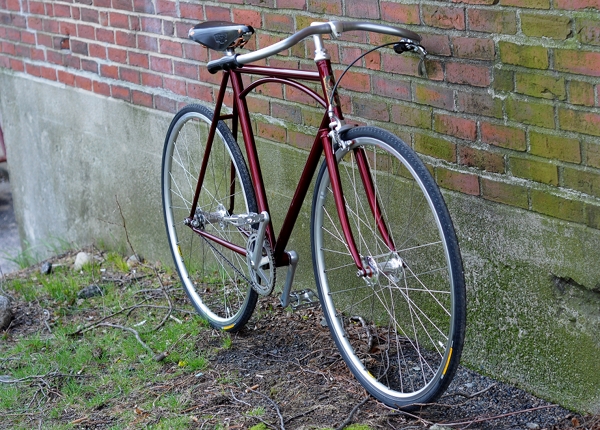
Jim's ANT was built in 2007. It is a 53cm frame with 700C wheels, built for fixed gear.

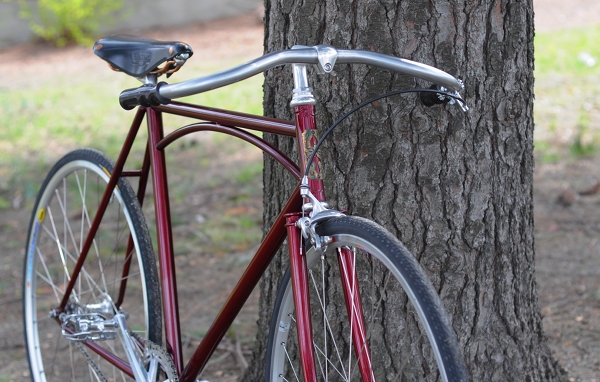
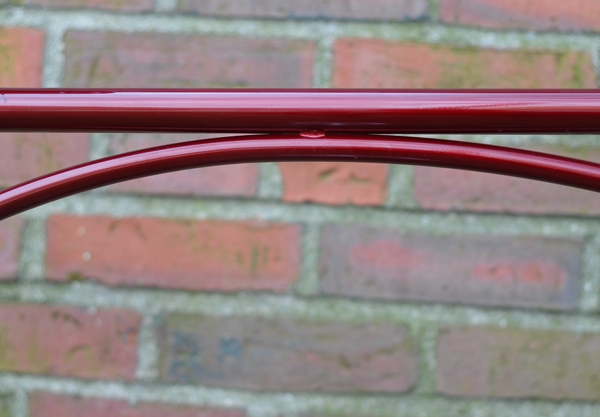
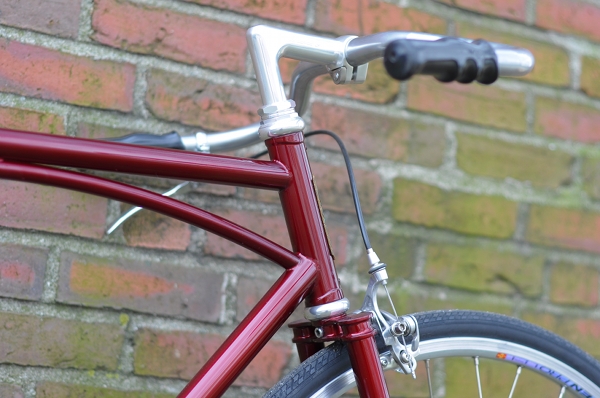
The paint is liquid coat and the colour is a shade of dark cherry that appears to drip seductively as it catches the light.

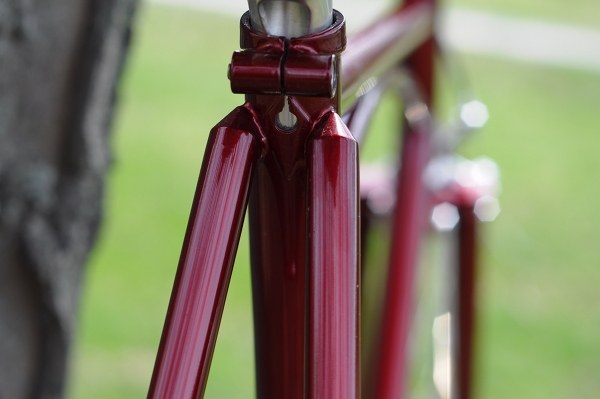
Photographing this part felt a little wrong, but I decided an invasion of privacy was in order here to show the full darlingness of this sexy creature.

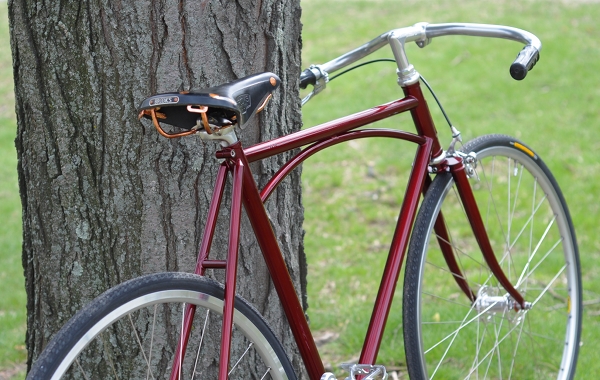
As I've written before, the truss frame is one design that I actually prefer to be TIG-welded (or fillet-brazed) as opposed to lugged, because lugs - to my eye - would look too busy here. The key for me is that these welds to be cleanly done, and this frame does not disappoint in that respect.

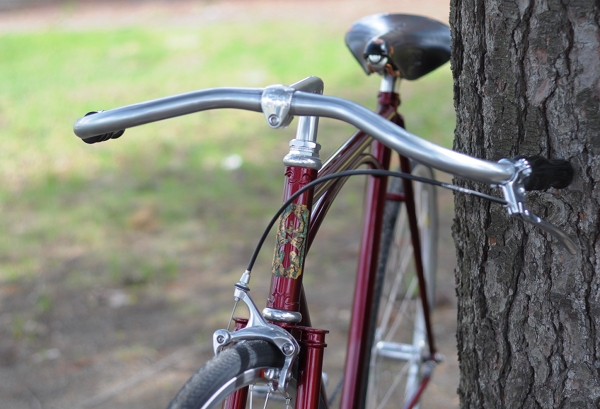
Jim A. set up this bicycle very similarly to the way I would have done. The upside-down Nitto Albatross handlebars strike the perfect balance between aggressive positioning and comfort. The single front caliper brake and the fixed gear rear wheel are uncluttered, simple to operate, and in keeping with a vintage look. I would put the brake lever on the right handlebar, but otherwise would set everything up just the same.

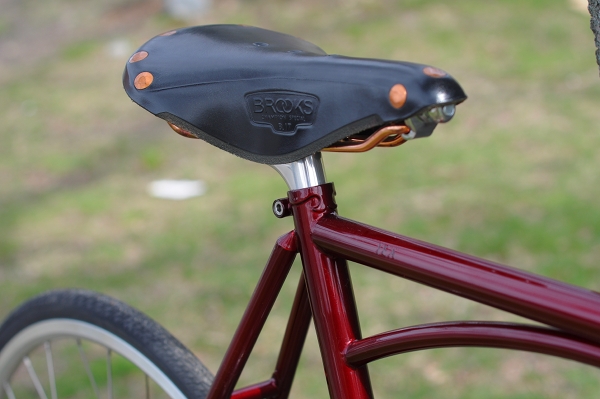
The copper rails and rivets on this Brooks B17 complement the frame beautifully. Those are Jim's initials carved into the toptube, in case you spotted them.

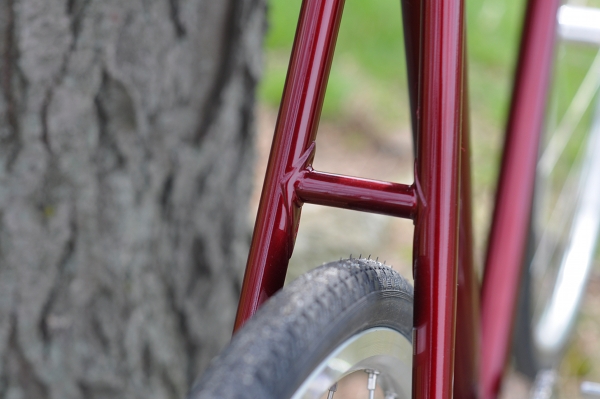
Rear brake(less) bridge. Though I have seen some truss frame bicycles equipped with fenders, racks and all sorts of extras, I think it looks best without - pathracer style.

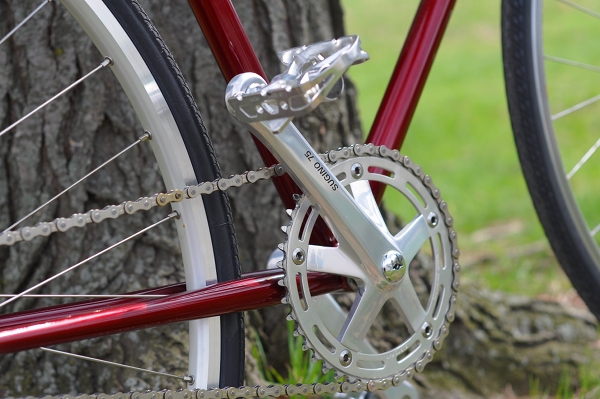
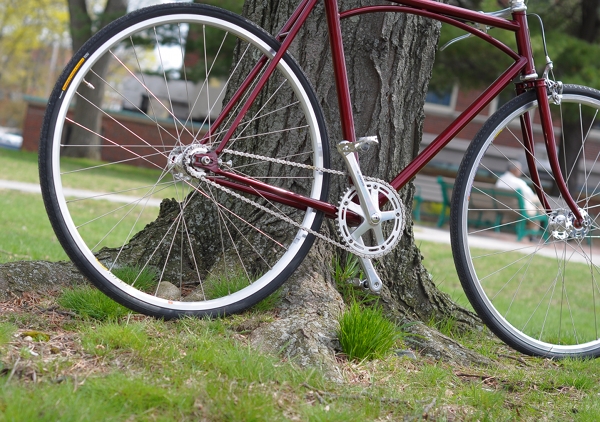
The Sugino 75 is a really nice track crankset that the Co-Habitant thinks I ought to get, should I ever upgrade my fixed gear roadbike. Truthfully, I kind of don't get what the big deal is with this particular crankset, but sure - it looks nice enough.

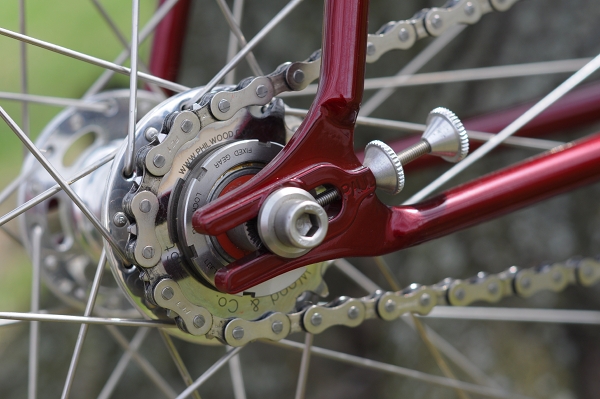
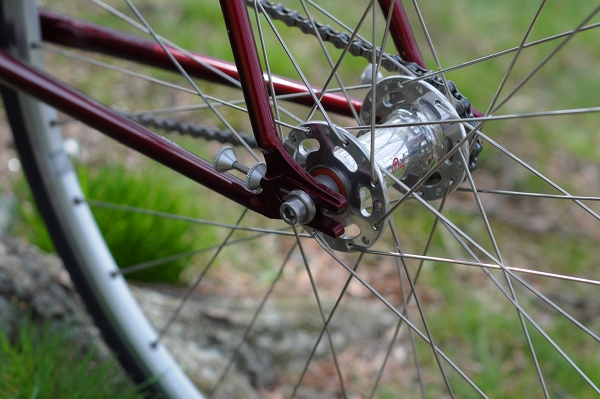
These Paul dropouts are beyond "nice" though: I'm afraid I will salivate if I look at these for too long. Mmmm!

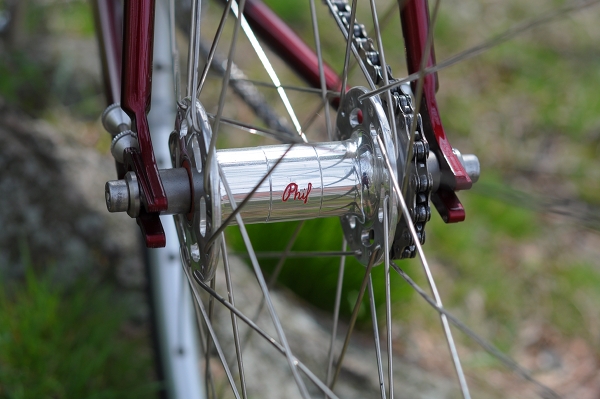
I wasn't especially attracted to Phil hubs until I saw this on Jim's bike. Gosh, this just looks so perfect.

And from another angle...

I rode Jim's truss bike briefly and slowly - It was in such perfect condition, that I was scared to death to let anything happen to it. Sadly, there was no one around to photograph me, as Jim was working and the Co-Habitant was busy buying components. But just imagine me looking both ecstatic and terrified as I pedaled this graceful machine along West Newton side streets, past pensioners and mothers with baby carriages... Of course they all wanted to ride it. As their eyes followed the glistening Phil hubs with longing and admiration, I felt like the luckiest girl in town.

I don't know how useful it is to review a custom-built bicycle, and one ANT truss frame may not necessarily feel or handle like another. But in case you are curious...

The first thing I noted, was that the bicycle felt significantly lighter than I expected it to. I guess because of the truss construction, I assumed that it would be on the heavier, clunkier side - more like a roadster. But this truss was whippet-sleek, lightweight, elegant and compact.

I got on and was surprised at how far forward I had to lean in order to reach the handlebars - Jim must have used a long stem to compensate for the swept-back Albatross bars. The aggressive posture made it easy to accelerate once I began riding and to go faster than I had intended. It was at this point that I realised how unaccustomed I'd gotten to riding fixed gear without foot retention, and also to the brake being mounted on the left. Thankfully, I figured it out in time to stop for the next red light - but after that I slowed down and was more careful. The ride was comfortable - nothing hurt and there was no excessive strain or pressure on any part of my body. For a bicycle with 28mm tires, it did not feel harsh over bumps. It felt stable, but then I tend to feel more stable on fixed gear bikes in general, so I don't know how telling that feedback is. Having never ridden a vintage pathracer, I cannot compare it to one - but I am fairly certain that the geometry of the ANT truss frame is modern and does not emulate actual vintage pathracers.  If I had to categorise the handling, more than anything it felt like a light and fast "casual" bicycle for those who are used to roadbikes but want something a bit gentler and more upright for Sunday afternoon rides with friends.

While some might question the practicality of a vintage-styled pathracer in an era when racing is done with dropbars and commuting is done with fenders and racks, I think that's beside the point. The classic truss frame pathracer is an idealised examplar of what ANT can create, and I find that appealing. Not all bicycles need to be versatile and practical in every respect. When I get my ANT, it will be almost exactly like this one - just because I want to support and celebrate what I believe to be Mike Flanigan's craftsmanship at its best.

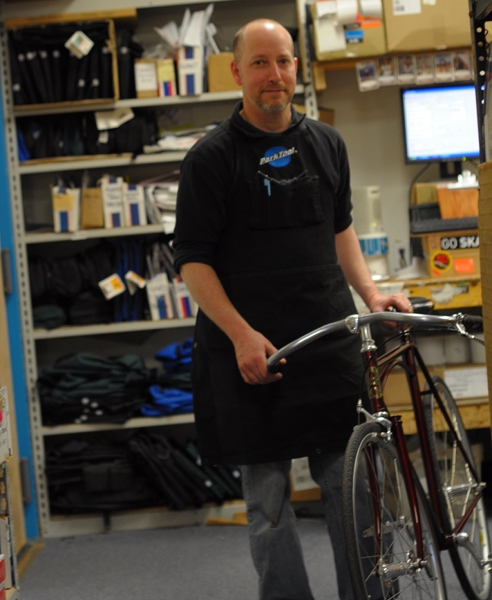
Though I only managed to take this shabby picture of Jim A. with his bike, some day I will meet him outside of work and take a nicer portrait. Until then, I thank him for entrusting me with his Truss. This is truly one of my favourite bicycles.
Read More
Posted in ANT, fixed gear, test rides | No comments

Why Not Here? Pondering the Ingredients of a Cycling Town

Posted on 8:59 AM by dvdsvdsdv
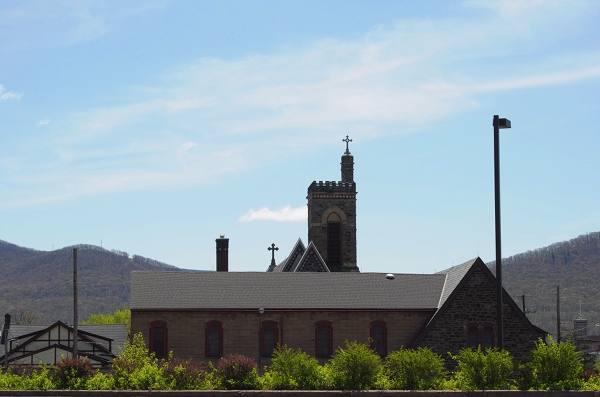
Having just returned from Central Pennsylvania, I am still trying to makes sense of my impressions. I was familiar with Lancaster County and the Poconos, but had never ventured west of these areas until now. While I'd imagined a wholesome and fertile land with dramatic mountain views, the landscape we encountered looked bare and depleted. We saw fairly few farm animals, and minimal vegetation. Many of the farms we passed seemed outright abandoned. Later we were told about the extraction of natural gasses that has become popular in the region, so perhaps this could account for it. It would also explain the enormous, brand-new-looking hotels that stood in sparsely populated areas, towering above the Methodist churches and the dilapidated barns.

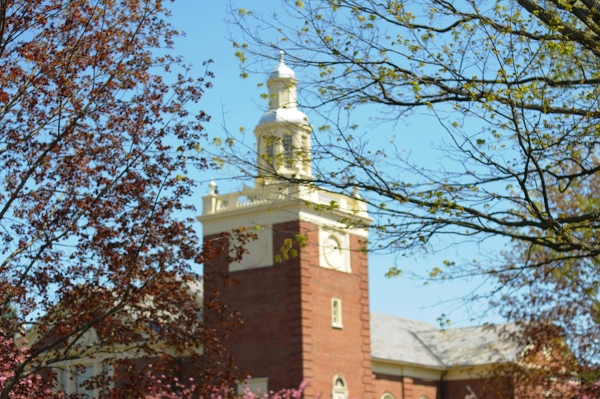
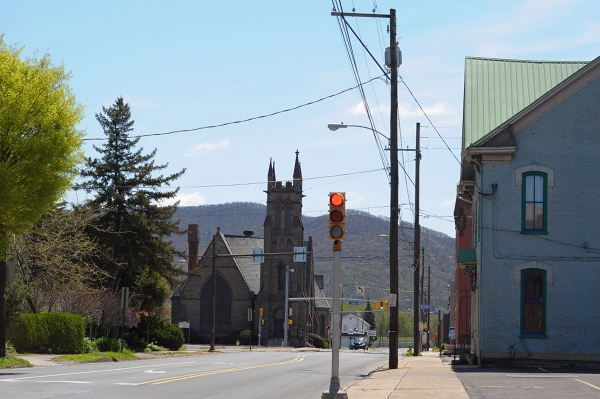
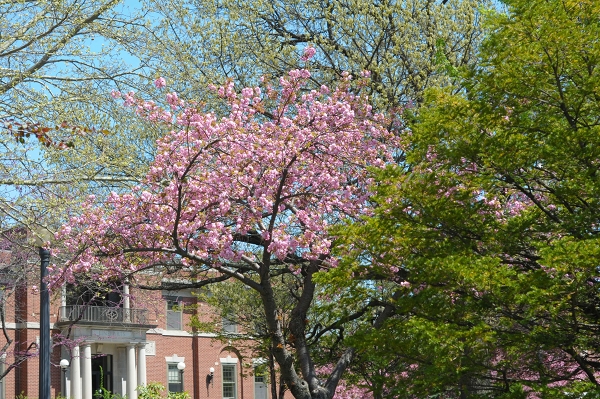
In the midst of all of this, we came upon a lively small town - a town with historical buildings, tree-lined streets, an active downtown area, and a picturesque Liberal Arts college with manicured grounds. Surrounded by mountains and farmlands, the town forms a microcosm of "culture" - offering the only sidewalks, storefronts, restaurants and cinemas for miles around. Exploring it with curiosity, it occurred to me that this was the sort of place a friend of mine refers to as "cycling-prone" - his theory being that "cycling culture" tends to develop in places that are structurally prepared for it, and where the population could benefit from it.

Among examples of structural preparedness he includes things like one-way streets with low speed limits. Check: This town is big on one-way streets, with speed limits under 30mph. Frequent street lights and well-designed intersections are also crucial, and this town has them. Large intersections involve dedicated left turn lights, which is helpful for cyclists as well.

There is also the concept of "manageable scale:" The argument is that cycling tends to be popular in small cities or towns with self-contained economies, because most commutes will be fairly short - yet still not quite convenient to make on foot. This town fits the bill perfectly: The population is around 30,000 and a great portion of the residents seem to live, work, and seek entertainment within the town's confines, simply because there is not much beyond it. And being in a valley, the terrain is mostly flat - making even the simplest single speed bicycle sufficient for commuting.

And then, there is the college - a small undergraduate institution with 2,000 full-time students who live on or close to campus year-round. College towns are supposed to be especially prone to embracing cycling, because it makes for a quick and inexpensive means of local transportation. College students also tend to be concerned about the environment, and some are drawn to cycling for those reasons. A quick glance at the college website shows that environmental issues are indeed prominent: Projects to reduce carbon footprints are announced, the benefits of a new recycling program are touted.

In short, all the ingredients are there for this to be a cycling town... and yet, it is not. I saw not a single transportation cyclist on the streets, and not a single bicycle locked up near the college campus or elsewhere in town. To me, this is interesting. Why no cycling here, but yes cycling in places like Hanover, NH and Ithaca, NY - where the towns and the surrounding landscapes are demographically and geographically similar? Sure, Central Pennsylvania can be called "old fashioned," and one could argue that cycling is a contemporary trend that will take a long time to reach here. But the same can be said of Northern NH: You won't see any locals outside of Hanover cycling, but within the town itself it is popular. Also, while I have not been to State College, PA - which is not far away - my understanding is that some students do cycle there for transportation as well.

I suppose my point is not so much to analyse this particular town, as to point out that the popularity of cycling cannot be explained with geography and demographics alone. Even with all the ingredients present, there is no guarantee that they will be utilised and combined into a cycling cocktail, if you will. I can only conclude that, in addition to the ingredients, there needs to be a catalyst to make it happen. To shake things up and get things started. And that catalyst could be anything - from an incoming class of trendy freshmen bringing their fixies to campus, to the college instituting a semester-based bicycle rental program, to the town suddenly deciding to paint bike lanes. I wonder whether that could happen in the coming years in this central Pennsylvania town and others like it.
Read More
Posted in social commentary, travel | No comments
Newer Posts Older Posts Home
Subscribe to: Posts (Atom)

Popular Posts

  • Computer Games
    I have never liked computer games, but with the influence of the Co-Habitant I am finally starting to get into them. Here he is, taking a br...
  • Upside Down!
    Fate has been kind to Marianne! Rather than being torn apart for donor components , she has been spared, and fitted with new handlebars. Wha...
  • Matters of Identity
    Well... I thought that I could quietly change my blogspot username without anybody noticing or caring, but it's caused some confusion. S...
  • Celestial Beings
    [image via Spernicelli ] Depending on who you speak to, it is either the most over-rated vintage bicycle in existence, or the Holy Grail: Th...
  • The Pashley Roadster Sovereign: Review After Two New England Winters
    If you are a regular reader, you probably know that the Co-Habitant owns a Pashley Roadster Sovereign. We bought a pair of Pashleys  when I...
  • Crime vs. Accident?
    I was cycling across town with a friend today, who suggested that we take the side streets instead of my usual route along the major roads. ...
  • Putting Your Foot Down
    Enough people have asked me about this now that I thought it worth writing about: How do I put a toe down in traffic while remaining on the ...
  • Pulling the Trigger vs Doing the Twist: Thoughts on 3-Speed Gear Shifters
    On bicycles with internally geared hubs, we typically see two types of gear shifters. The trigger shifter (pictured above) is a small gadget...
  • Manufacturers with 'History': Does Continuity Matter?
    What does it mean, when we say that a bicycle manufacturer has a long history? There are manufacturers out there, whose names are legendary ...
  • An Igleheart and a 'Sex Hub'
    At the New England Bicycle Expo  a couple of weekends ago, I had the pleasure of meeting legendary New England framebuilder Christopher Igle...

Categories

  • ANT
  • art
  • bags
  • basket
  • beginners
  • Bella Ciao
  • bicycle events
  • bicycle industry
  • bicycle reviews
  • bike friends
  • bike shopping
  • blog development
  • blogiversary
  • books
  • Boston
  • Brompton
  • Brooks
  • Cape Cod
  • cargo bikes
  • cars
  • cats
  • children
  • clipless
  • clothing
  • Co-Habitant
  • coaster brake
  • comfort
  • Constance
  • countryside
  • diamond frame
  • DIY
  • DL-1
  • dress guards
  • drop bars
  • Eustacia Vye
  • fashion industry
  • fenders
  • films
  • fixed gear
  • flowers
  • food
  • framebuilding
  • Gazelle
  • Geekhouse
  • gender
  • give-away
  • grips
  • handlebars
  • handmade
  • holidays
  • Interbike
  • Italian bicycles
  • Jacqueline
  • knitting
  • lights
  • local bike shops
  • locking up
  • loop frame
  • lugs
  • Maine
  • Marianne
  • mercian
  • Mercier
  • mixte
  • Moser
  • Motobecane
  • Myles
  • night time cycling
  • North Shore
  • paceline
  • Pashley
  • pilen
  • poll
  • product reviews
  • racks
  • rain
  • Raleigh
  • Randonneur
  • randonneuring
  • restoration
  • Rivendell
  • roadcycling
  • rod brakes
  • Rodney
  • Romania
  • Royal H
  • Royal H. Mixte
  • saddles
  • safety
  • Seven
  • shop visits
  • silliness
  • skirt
  • social commentary
  • Soma
  • somervillain
  • stories
  • summer cycling
  • sun and heat
  • Surly
  • tandem
  • technique
  • test rides
  • tires
  • tools
  • traffic
  • trails
  • transportation options
  • travel
  • unpaved
  • urban cycling
  • Urbana
  • Velo Orange
  • Velouria
  • Vienna
  • vintage
  • winter cycling

Blog Archive

  • ▼  2011 (236)
    • ▼  September (17)
      • Frills or Basics?
      • European City Bikes and the North American Market
      • Thoughts on Fixed Gear Cranksets?
      • From Holsters to Corsets: The Cycling Accessory Fe...
      • Yeah Baby! Transportational Elegance Reigns at Int...
      • Handmade Bicycles at Interbike
      • Bleak Prognosis for the Dutch Bicycle?
      • GB Components Are Back! ...And You Can Have Their ...
      • Song, Dance and Bicycle Romance: The Interbike Fas...
      • On Bicycle Reviews
      • What's the Difference?
      • In the Raw
      • Frames of Mind: Why Did We Not Cycle?
      • Embracing Wrinkles
      • Reunited
      • The Art of the Ride Report: a Touring Bicycle Give...
      • If a Branch Falls in a Forest...
    • ►  August (22)
    • ►  July (26)
    • ►  June (27)
    • ►  May (27)
    • ►  April (26)
    • ►  March (30)
    • ►  February (30)
    • ►  January (31)
  • ►  2010 (262)
    • ►  December (28)
    • ►  November (29)
    • ►  October (24)
    • ►  September (23)
    • ►  August (25)
    • ►  July (25)
    • ►  June (20)
    • ►  May (19)
    • ►  April (20)
    • ►  March (17)
    • ►  February (18)
    • ►  January (14)
Powered by Blogger.

About Me

dvdsvdsdv
View my complete profile